
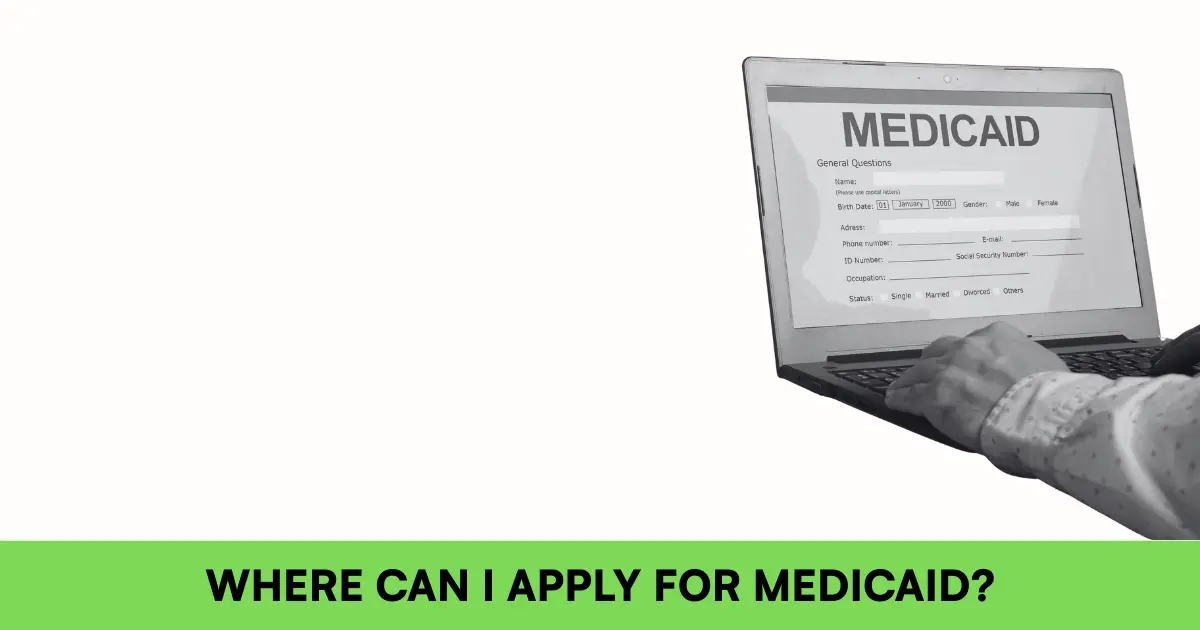
You can apply for Medicaid online, by phone, in person, or by mail — and you can do it any time of year. Unlike most health insurance programs, Medicaid does not have an annual enrollment window. If you think you qualify, you can start your application today.
Because Medicaid is run by each state individually, where you apply and what the process looks like depends on where you live. This guide covers every application method, what documents you need to have ready, how long approval takes, what to do if you are denied, and how to renew your coverage when the time comes.
What Is Medicaid and Who Is It For?
Medicaid is a joint federal and state health insurance program that provides free or low-cost coverage to people who meet income and eligibility requirements. It covers doctor visits, hospital care, prescriptions, mental health services, preventive care, and much more depending on your state.
Affiliate Links — If you sign up, we may earn a commission. As an Amazon Associate we earn from qualifying purchases.

Medicaid is available to eligible low-income adults, children, pregnant people, seniors, and people with disabilities. Since 2014, the Affordable Care Act allowed states to expand Medicaid to cover most adults with incomes up to 138% of the federal poverty level. As of 2026, 40 states and Washington DC have adopted Medicaid expansion. In states that have not expanded, eligibility is more limited and often restricted to specific groups such as children, pregnant women, and people with disabilities.
Medicaid is not the same as Medicare. Medicare is a federal program primarily for people aged 65 and older. Medicaid is income-based and available to qualifying people of any age.
The Easiest Way to Apply for Medicaid — Start with Healthcare.gov
The simplest starting point for most people is Healthcare.gov, the federal health insurance marketplace. Even though Healthcare.gov is primarily a platform for private Marketplace plans, a single application through the site screens you for both Medicaid and premium tax credits for Marketplace coverage at the same time.
Here is how it works: you fill out one application on Healthcare.gov, the system evaluates your income and household information, and if you appear to be eligible for Medicaid, it automatically forwards your information to your state Medicaid agency. You do not need to apply twice.
Affiliate Links — If you sign up, we may earn a commission. As an Amazon Associate we earn from qualifying purchases.
If your state runs its own marketplace — which includes states like California, New York, Washington, Colorado, Massachusetts, Connecticut, and others — Healthcare.gov will redirect you to your state’s platform to complete the application. The outcome is the same: one application screens you for Medicaid and other coverage options simultaneously.
To start, go to Healthcare.gov, select “Apply for Coverage,” and choose your state. The site will direct you to the right place based on where you live.
How to Apply for Medicaid — All Four Methods
Regardless of which state you are in, there are four ways to apply for Medicaid. The method you choose is a matter of convenience — they all lead to the same application and the same eligibility determination.
Apply Online
Online is the fastest and most commonly used method. Every state has an online Medicaid portal where you can complete and submit your application, upload documents, and track your status. Some states use the federal Healthcare.gov platform; others have their own websites.
When you apply online, you can start and save your application and come back to finish it if needed. Most state portals are available 24 hours a day, seven days a week. Online applications typically process faster than paper applications because the information is entered directly into the system without a manual data entry step.
Apply by Phone
Every state Medicaid office has a phone line where you can apply with the help of a live representative. The representative will walk you through the application questions, record your answers, and submit the application on your behalf. This is a good option if you are more comfortable speaking than typing, if you have questions about the process, or if you do not have easy access to a computer or internet connection.
The federal Marketplace helpline at 1-800-318-2596 can help you start an application through Healthcare.gov or direct you to your state’s Medicaid office. Most state Medicaid offices also have their own toll-free numbers.
Apply In Person
You can apply for Medicaid in person at your local state Medicaid or social services office, at a community health center, or at a federally qualified health center (FQHC). FQHCs are community-based healthcare providers that receive federal funding to serve people regardless of ability to pay — and many have staff who help patients complete Medicaid applications on-site.
Applying in person is helpful if you need assistance gathering documents, have a complex household situation, or simply want someone to review your application with you before submitting. Hospital financial assistance offices and social workers can also help with in-person applications.
Apply by Mail
Most states allow you to download a paper Medicaid application, complete it by hand, and mail it to your state Medicaid office. This is the slowest method — processing times for paper applications are typically longer — but it is available if online, phone, or in-person options are not accessible to you.
You can download paper applications from your state Medicaid agency’s website or pick them up at a local social services office.
Where to Apply For Medicaid by State — Online Portals
Because Medicaid is state-administered, each state has its own application portal. Here are the primary online application portals for every state and Washington DC.
What Documents Do You Need to Apply for Medicaid?
Having your documents ready before you start your application makes the process significantly faster. The exact requirements vary by state, but most applications ask for the same core set of documents.
Proof of Identity
You need to verify who you are. Acceptable documents typically include a driver’s license, state-issued ID card, passport, or birth certificate. For children, a birth certificate is usually sufficient.
Proof of Residency
You need to show that you live in the state where you are applying. Acceptable documents typically include a utility bill, a bank statement, a lease or mortgage statement, or a recent piece of official mail with your name and address on it.
Proof of Income
Medicaid eligibility is income-based, so you need to document your household income. Acceptable documents include recent pay stubs (typically the last 30 days or two most recent), a letter from your employer stating your wages, self-employment records and tax returns, unemployment benefit award letters, Social Security or SSI award letters, or pension or retirement income statements. If you have no income, you may need to provide a written statement to that effect.
Social Security Numbers
Most states require Social Security numbers for all household members applying for coverage. If a family member does not have a Social Security number, they may still be eligible for coverage in some states depending on their immigration status — particularly US citizen children, regardless of their parents’ status.
Immigration Status Documentation
If you or a household member is not a US citizen, you may need to provide documentation of your immigration status. Many legal immigrants with at least five years of qualifying residency are eligible for Medicaid. US citizen children in any household qualify regardless of their parents’ immigration status.
Health Insurance Information
If you or anyone in your household currently has other health insurance, you will need to provide information about that coverage. Medicaid coordinates with other insurance as a payer of last resort.
Medical Information (for certain programs)
If you are applying for Medicaid based on a disability, you may need to provide medical records, disability determinations, or documentation of your condition. This is particularly relevant for long-term care Medicaid and disability-based eligibility categories.
What Happens After You Apply?
Once you submit your Medicaid application, here is what to expect.
Application Review
A Medicaid caseworker will review your application and documentation to determine whether you meet your state’s eligibility requirements. They may contact you by phone or mail if they need additional information or if something in your application needs clarification. It is important to respond promptly to any follow-up requests — delays in responding can slow down your approval or result in a denial.
Processing Time
Most states are required to process standard Medicaid applications within 45 days. Applications based on disability may take up to 90 days because they require a more detailed review of medical documentation. Applications for pregnant women and children are often processed faster — sometimes within a few days — because of the urgent nature of their coverage needs.
Approval
If your application is approved, you will receive a notice in the mail with your Medicaid ID number or card, information about your coverage start date, and instructions for selecting a managed care plan if your state uses them. In managed care states, you will typically have a window of 30 to 90 days to choose a Managed Care Organization (MCO) — a private health plan that administers your Medicaid benefits. If you do not choose a plan, the state will assign one to you.
Denial
If your application is denied, you will receive a written notice explaining the specific reason for the denial. Common reasons include income above the state limit, failure to meet residency requirements, missing documents, not responding to a follow-up request, or not meeting the categorical eligibility requirements in states that have not expanded Medicaid.
You have the right to appeal any denial. The denial notice will include information about how to request a fair hearing and the deadline for doing so — usually 30 to 90 days from the date of the notice. Do not miss the appeal deadline.
How to Check Your Medicaid Application Status
After you apply, you can check your status through the same channel you used to apply.
If you applied online, log back in to your state’s Medicaid portal or Healthcare.gov account to view your application status. Most portals show real-time status updates.
If you applied by phone or in person, call your state Medicaid office directly and provide your name, date of birth, and Social Security number. A representative can look up your application and tell you where it stands.
Keep your contact information current — both phone number and mailing address. Caseworkers and the Medicaid office may try to reach you during the review process, and a missed call or undelivered letter can delay your approval.
Who Qualifies for Medicaid?
Medicaid eligibility varies by state, but there are broad federal categories that all states must cover, and many states have expanded coverage beyond the federal minimums.
In Medicaid expansion states, most adults with household incomes at or below 138% of the federal poverty level (FPL) qualify. As of 2026, 138% FPL equals approximately $20,783 per year for an individual and $35,632 for a family of three. These figures are updated annually.
In non-expansion states, eligibility is more limited. Most non-expansion states cover children up to certain income levels, pregnant women, parents with dependent children whose income falls below a low threshold, people receiving Supplemental Security Income (SSI), and seniors and people with disabilities who meet income and asset requirements.
Children are eligible through both Medicaid and the Children’s Health Insurance Program (CHIP), which covers children in families with incomes too high for Medicaid but too low to afford private insurance.
Pregnant people are often eligible for Medicaid at higher income levels than other adults, and pregnancy Medicaid can sometimes be approved retroactively to cover prenatal care before the application date.
Seniors and people with disabilities may qualify for Medicaid alongside Medicare — known as dual eligibility — which can cover costs that Medicare does not, including long-term care, nursing home care, and dental coverage in many states.
Citizenship and immigration status affect eligibility. US citizens qualify regardless of where their parents were born. Many lawful permanent residents with at least five years of qualifying US residency are eligible. Undocumented individuals generally do not qualify for full Medicaid but may qualify for emergency Medicaid, and their US citizen children qualify fully.
What Does Medicaid Cover?
Medicaid covers a broad range of healthcare services, and coverage varies somewhat by state. Federal law requires all state Medicaid programs to cover certain mandatory services.
Mandatory Medicaid services include inpatient and outpatient hospital care, physician services, laboratory and X-ray services, nursing facility services for adults, home health services, family planning services, rural health clinic services, and early and periodic screening, diagnosis, and treatment (EPSDT) for children under 21.
Many states also cover optional services such as prescription drugs, dental care, vision care, physical and occupational therapy, speech therapy, mental health and substance use disorder services, personal care services, and medical transportation.
Long-term care — including nursing home care and home and community-based services for people who need help with daily activities — is also covered by Medicaid, making it the primary payer for long-term care in the United States for people who meet income and care level requirements.
Where Do I Renew My Medicaid Coverage?
Medicaid coverage is not automatically permanent. Most states require you to renew your eligibility annually, though the timing and process vary.
Your state Medicaid agency will mail you a renewal notice before your coverage is up for review — typically 60 to 90 days before your renewal date. The notice will tell you what information needs to be updated and how to complete the renewal.
You renew through the same place you originally applied — the state Medicaid portal, Healthcare.gov, or by calling your state Medicaid office. In many cases, the state can renew your coverage automatically if your income and eligibility information is already on file through other state systems. This is called ex parte renewal.
If your income or household situation has changed since you first enrolled, update that information at renewal. If your income has increased above the Medicaid limit, the renewal process will screen you for Marketplace coverage and subsidy eligibility so you can transition to a new plan without a gap in coverage.
Keep your mailing address and phone number current with your state Medicaid agency at all times. Missing a renewal notice because the letter went to an old address is one of the most common reasons people lose Medicaid coverage unintentionally.
Getting Help with Your Medicaid Application
You do not have to apply alone. Several free resources can help you complete the application, gather documents, and understand your options.
Community Health Centers and Federally Qualified Health Centers (FQHCs) often have enrollment assisters on staff who help patients apply for Medicaid at no cost. You can find an FQHC near you at findahealthcenter.hrsa.gov.
Healthcare.gov Navigators and Certified Application Counselors (CACs) are trained and certified to help people apply for Medicaid and Marketplace coverage for free. They do not work for insurance companies and do not have a financial incentive to steer you toward any particular plan. Find free local help at localhelp.healthcare.gov.
Hospital Financial Assistance Offices frequently have social workers or financial counselors who can help patients — including uninsured patients — apply for Medicaid before or after receiving care. If you have a hospital bill and do not have insurance, ask about both financial assistance and Medicaid enrollment before paying.
State Social Services Offices in most states have staff who can help you apply for Medicaid in person and answer questions about eligibility.
Legal Aid Organizations can help if you have been denied Medicaid and want to appeal, or if you have a complex situation — such as an immigration-related eligibility question — that requires legal guidance. Most legal aid services are free for people with low incomes.
Frequently Asked Questions
Where do I apply for Medicaid?
You can apply online through Healthcare.gov or your state’s Medicaid portal, by phone through your state Medicaid office or the federal helpline at 1-800-318-2596, in person at a local social services office or community health center, or by mail using a paper application downloaded from your state’s website.
Can I apply for Medicaid at any time?
Yes. Medicaid does not have an annual open enrollment period. You can apply at any time of year, and coverage can begin as soon as the month you apply in many cases — sometimes even retroactively for pregnant women and certain other groups.
How long does it take to get approved for Medicaid?
Most standard applications are processed within 45 days. Applications based on disability may take up to 90 days. Applications for pregnant women and children are often approved faster, sometimes within days. Responding promptly to any follow-up requests from your caseworker helps avoid delays.
What documents do I need to apply for Medicaid?
You typically need proof of identity (driver’s license, passport, or birth certificate), proof of state residency (utility bill or lease), proof of income (pay stubs, tax returns, or employer letters), Social Security numbers for household members, and information about any other health insurance you have. Requirements vary by state.
Can I apply for Medicaid online?
Yes. Every state has an online Medicaid application portal. In states that use the federal Marketplace, you can apply through Healthcare.gov. In states with their own marketplace, you apply through the state’s platform. See the state-by-state table above for direct links.
What happens if I am denied Medicaid?
You will receive a written notice explaining the reason for the denial. You have the right to appeal. The denial notice will include the deadline for requesting a fair hearing — typically 30 to 90 days from the date of the notice. Common reasons for denial include income above the limit, missing documents, or not meeting categorical eligibility requirements in non-expansion states.
Is Medicaid free?
For most people who qualify, Medicaid has no monthly premium, no deductible, and low or no copays. Some states do charge small premiums for certain groups — particularly for adults in Medicaid expansion — but these are typically very low. Children and pregnant women generally receive Medicaid with no cost sharing.
Can I get Medicaid if I am employed?
Yes. Working does not automatically disqualify you from Medicaid. Your eligibility is based on your household income relative to the federal poverty level, not whether you are employed. Many working adults with low wages, part-time jobs, or jobs without employer-sponsored insurance qualify for Medicaid.
Can undocumented immigrants apply for Medicaid?
Undocumented individuals generally do not qualify for full Medicaid coverage. However, emergency Medicaid is available in most states for emergency medical care regardless of immigration status. US citizen children qualify for Medicaid fully, regardless of their parents’ status. Many lawful permanent residents with five or more years of qualifying US residency are eligible for full coverage.
Where do I renew my Medicaid coverage?
You renew through the same place you originally applied — your state Medicaid portal, Healthcare.gov, or your state Medicaid office by phone. Your state will mail you a renewal notice before your coverage is up for review. Keep your address current to make sure you receive it.
Can I get help applying for Medicaid for free?
Yes. Community health centers, hospital social workers, Healthcare.gov navigators, and state social services offices can all help you apply at no cost. To find free local enrollment help, visit localhelp.healthcare.gov.
Bottom Line
Applying for Medicaid is more straightforward than many people expect. You can apply online in most states in under 30 minutes, you can do it any time of year, and free help is available if you need it.
The key is to start. If you think you might qualify — based on your income, a pregnancy, a disability, or the age of your children — submit an application and let the system determine your eligibility. The worst outcome is a denial with the right to appeal. The best outcome is free or low-cost health coverage for you and your family.
For questions about your specific state’s Medicaid program, contact your state Medicaid agency directly or call the federal Medicaid and CHIP helpline at 1-877-267-2323.
Last updated: 2026 | Based on CMS Medicaid program guidelines and state agency information. Eligibility rules, income limits, and application processes vary by state and are subject to change — verify current requirements with your state Medicaid agency or at Medicaid.gov.